Guide
Programmatic advertising management without the black box
 Reinier van Duijne Updated 4 min read
When does programmatic fit your channel mix?
Programmatic is rarely the first channel you set up. Search captures existing demand, and social builds demand at sharp CPMs (cost per thousand impressions). Programmatic only becomes interesting once both are profitable and hitting their ceiling: for incremental reach outside the walled gardens (the closed platforms of Google and Meta), for awareness and consideration at scale, and for formats that Google and Meta simply don't sell.
If search or social isn't working yet, programmatic won't fix that. A good partner says so out loud, instead of selling you an extra channel just because they can. That's why I only recommend programmatic when the foundation is in place and your goal reaches further than your current mix can handle.
Open exchange, private marketplace or programmatic guaranteed
The buying model largely determines your quality and your price. On the open exchange you buy maximum reach at low CPMs through real-time auctions, but the quality varies. Without tight inclusion lists and pre-bid filters, you risk ending up on sites that exist purely for ads (made-for-advertising) and with poor viewability (ads that barely make it onto the screen).
A private marketplace (PMP) gives you access to selected publishers through deals, with better placements and more control at a higher CPM. Programmatic guaranteed locks in volume and price upfront with a specific publisher: the certainty of traditional media buying, combined with programmatic targeting and frequency capping. A good partner explains for each campaign which mix makes sense, instead of running everything on the open exchange by default.
Channels: display, online video, CTV, native and DOOH
Programmatic has long been about more than banners. Display is still the workhorse for reach and retargeting. Online video and connected TV (CTV) put your brand on the big screen, with targeting and frequency management that linear TV doesn't offer. Native advertising blends into the editorial environment and suits consideration content. Digital out-of-home (DOOH) is now bought through the same DSPs, steered by location, time of day and context.
Your channel choice follows from your goal and audience, not from whatever a partner happens to resell. So always ask why a channel is in your plan and how its impact will be measured.
How do you judge a programmatic partner?
The biggest risk when you outsource programmatic isn't the execution. It's the black box around it. Between your media budget and the actual impression sit DSP fees, data and verification costs, and your partner's margin. So set these requirements upfront:
- Full transparency on tech fees and margins: you want to see in black and white which share of your budget is working media.
- Access to your own DSP data: contracts and seats visible, log-level reporting available on request, and no data loss when you leave.
- Optimization for incrementality (reach you didn't already have elsewhere) and viewable impressions, not cheap bulk CPMs that mostly make the report look good.
- Active brand safety: inclusion lists, pre-bid verification and a clear policy on made-for-advertising inventory.
In-house, outsourced or hybrid?
Bringing programmatic in-house gives you maximum control over data and contracts, but it asks a lot: DSP knowledge you keep up to date, capacity for daily optimization and direct agreements with tech vendors. That mainly pays off when programmatic is one of your biggest channels and you run a steady budget on it.
For most marketing teams a hybrid setup is more realistic: strategy, data and goals in-house, execution with a specialist. I set up the partnership so you remain the owner of your accounts and data. That way, bringing it in-house later stays an option instead of a hard break.
Programmatic management by Reinforce Digital
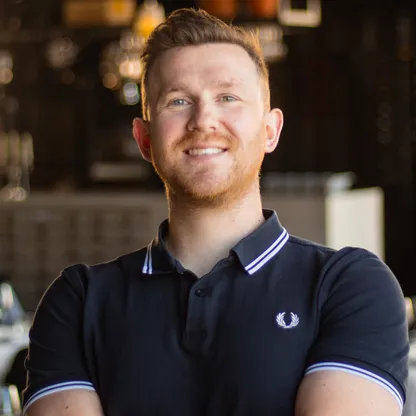
I run programmatic and display alongside SEA and paid social, with 9+ years of experience in performance marketing. That means I always judge programmatic in the context of your full mix, and I only recommend it when it demonstrably adds something. You work directly with a senior specialist, with no account manager in between.
I work with a fixed monthly fee, a one-month notice period and no annual contracts. Want to know whether programmatic already fits your mix, or how your current setup is doing? Request a free Performance Quick Scan or book a no-obligation intro call.
Frequently asked questions
What does programmatic management cost?
I charge a fixed monthly fee for management, separate from your media budget. With any partner, also look at the indirect costs: DSP fees, data costs and margins on media. With me, you simply see those broken down.
Do I stay the owner of my data and accounts?
Yes. Accounts, settings and data stay yours, including visibility into the DSP reports. If you switch partners or bring programmatic in-house, you take everything with you.
At what media budget does programmatic make sense?
I deliberately don't put a fixed number on that, because it depends on your goal, channels and deals. The order matters more: get search and social right first, then add programmatic for incremental reach. In an intro call we decide together whether it makes sense right now.
Can you work with our in-house team?
Yes, that's actually a common setup. Your team keeps strategy and data in its own hands, I handle the execution and help think through buying models, deals and measurement. I set up access and agreements so you stay flexible.
First see where your return is leaking?
Outsourcing to me means your advertising is handled from A to Z. The free Quick Scan is the first step: I go through your account with read-only access and show you your 3 biggest opportunities, in a report that is yours to keep, even if we do not work together afterwards.